How Does HEPA Filtration Work in a Biological Safety Cabinet?
News Details
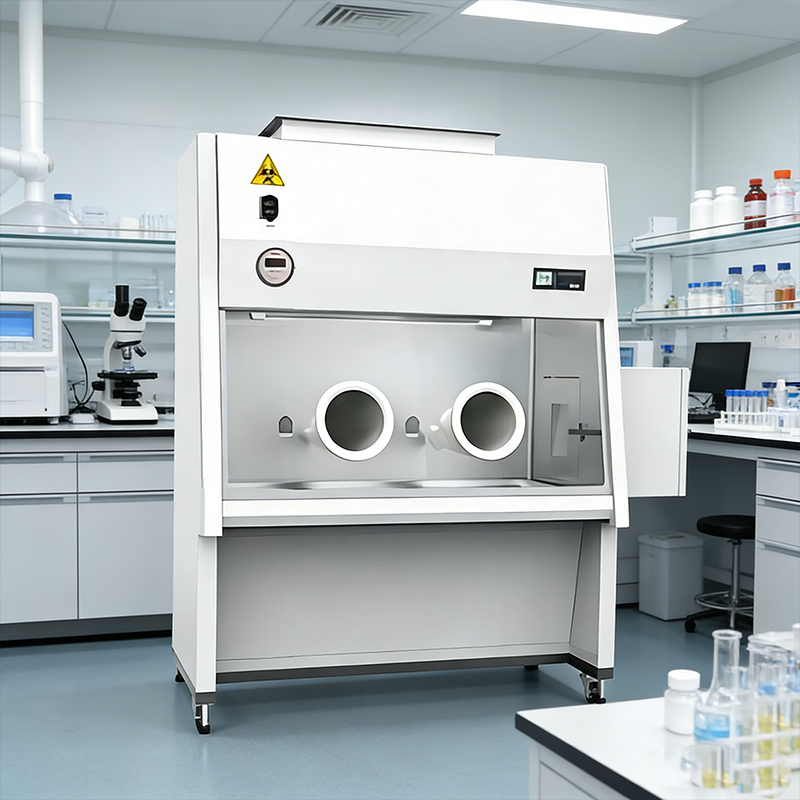
In modern laboratories, safety and contamination control are essential. A biological safety cabinet (also called a biosafety cabinet) relies heavily on HEPA filtration to protect users, samples, and the environment. But how exactly does HEPA filtration work inside a biological safety cabinet, and why is it so important?
In this article, we explain the working principle of HEPA filtration in a biological safety cabinet, while also showing how advanced solutions from AMPLE support safe and efficient laboratory operations.
What Is HEPA Filtration in a Biological Safety Cabinet?
HEPA stands for High-Efficiency Particulate Air. A HEPA filter is designed to remove at least 99.97% of airborne particles ≥0.3 microns.
In a biological safety cabinet, HEPA filtration plays a key role. It ensures that:
- Air entering the cabinet is clean
- Air inside the workspace remains sterile
- Exhaust air does not contaminate the environment
Therefore, HEPA filtration is the core technology that makes a biosafety cabinet safe and reliable.
How HEPA Filtration Works in a Biosafety Cabinet
To understand how HEPA filtration works, let’s break it down step by step.
1. Air Intake and Pre-Filtration
First, air is drawn into the front opening of the biological safety cabinet. This inward airflow creates a protective barrier.
At this stage, larger particles may be removed by pre-filters. Then, the air moves toward the HEPA filter system.
2. HEPA Filtration Process
Next, air passes through the HEPA filter. This is where the main filtration happens.
HEPA filters capture particles through three mechanisms:
- Interception – particles stick to filter fibers
- Impaction – larger particles collide with fibers
- Diffusion – very small particles move randomly and get trapped
Because of these combined effects, the biosafety cabinet can remove bacteria, spores, and many airborne contaminants effectively.
3. Laminar Airflow in the Biological Safety Cabinet
After filtration, clean air flows downward in a uniform pattern. This is called laminar airflow.
This step is critical because:
- It protects samples from contamination
- It maintains a sterile work zone
- It ensures consistent airflow inside the biological safety cabinet
Many advanced systems from AMPLE are designed to maintain stable laminar airflow for precise laboratory work.
4. Air Recirculation and Exhaust
Finally, the air is either:
- Recirculated inside the cabinet (common in Class II A2)
- Fully exhausted through HEPA filters (Class II B2)
Before leaving the biosafety cabinet, the air passes through HEPA filters again. This ensures no harmful particles are released into the laboratory.
Why HEPA Filtration Is Essential in a Biological Safety Cabinet
HEPA filtration is not just a feature—it is the foundation of a biological safety cabinet.
It provides three levels of protection:
Personnel Protection
HEPA-filtered airflow prevents harmful bioaerosols from reaching the user.
Product Protection
Clean, filtered air ensures that samples remain uncontaminated.
Environmental Protection
Filtered exhaust air prevents biological hazards from entering the lab environment.
Because of this, a biosafety cabinet without proper HEPA filtration cannot meet safety standards.
HEPA vs ULPA Filtration in Biosafety Cabinets
Some high-end biological safety cabinets also use ULPA filters.
- HEPA filter → 99.97% efficiency at 0.3 microns
- ULPA filter → 99.999% efficiency at smaller particles
While ULPA offers higher efficiency, HEPA filtration is still the most widely used standard in biosafety cabinets due to its balance of performance and cost.
Key Features of High-Quality HEPA Filtration Systems
When choosing a biological safety cabinet, pay attention to the filtration system.
High-quality systems typically include:
- Dual HEPA filters (supply + exhaust)
- Leak-tested filter housing
- Real-time airflow monitoring
- Alarm systems for filter failure
Manufacturers like AMPLE integrate these features into their biosafety cabinets to ensure consistent performance and safety.
Maintenance of HEPA Filters in a Biosafety Cabinet
Even the best HEPA filters require regular maintenance.
Routine Maintenance Includes:
- Annual certification and testing
- Filter integrity (leak) testing
- Monitoring airflow performance
- Scheduled filter replacement
Over time, filters become saturated. Therefore, replacing HEPA filters is essential to maintain the efficiency of the biological safety cabinet.
Common Mistakes to Avoid
To ensure proper HEPA filtration performance, avoid these mistakes:
- Blocking airflow inside the cabinet
- Using damaged or uncertified filters
- Skipping regular maintenance
- Choosing low-quality equipment
A poorly maintained biosafety cabinet can compromise both safety and research results.
Why Choose a Reliable Manufacturer
The performance of HEPA filtration depends not only on the filter itself but also on the cabinet design.
Choosing a reliable manufacturer like AMPLE ensures:
- High-quality HEPA filtration systems
- Stable airflow design
-
Share to:


