Laboratory Ductless Fume Hood for Efficient Workspace Design
Explore how a ductless fume hood enhances lab layout, reduces installation footprint, and supports safer, more efficient lab operations.
2026/11/09
Reading volume: 1
News Details
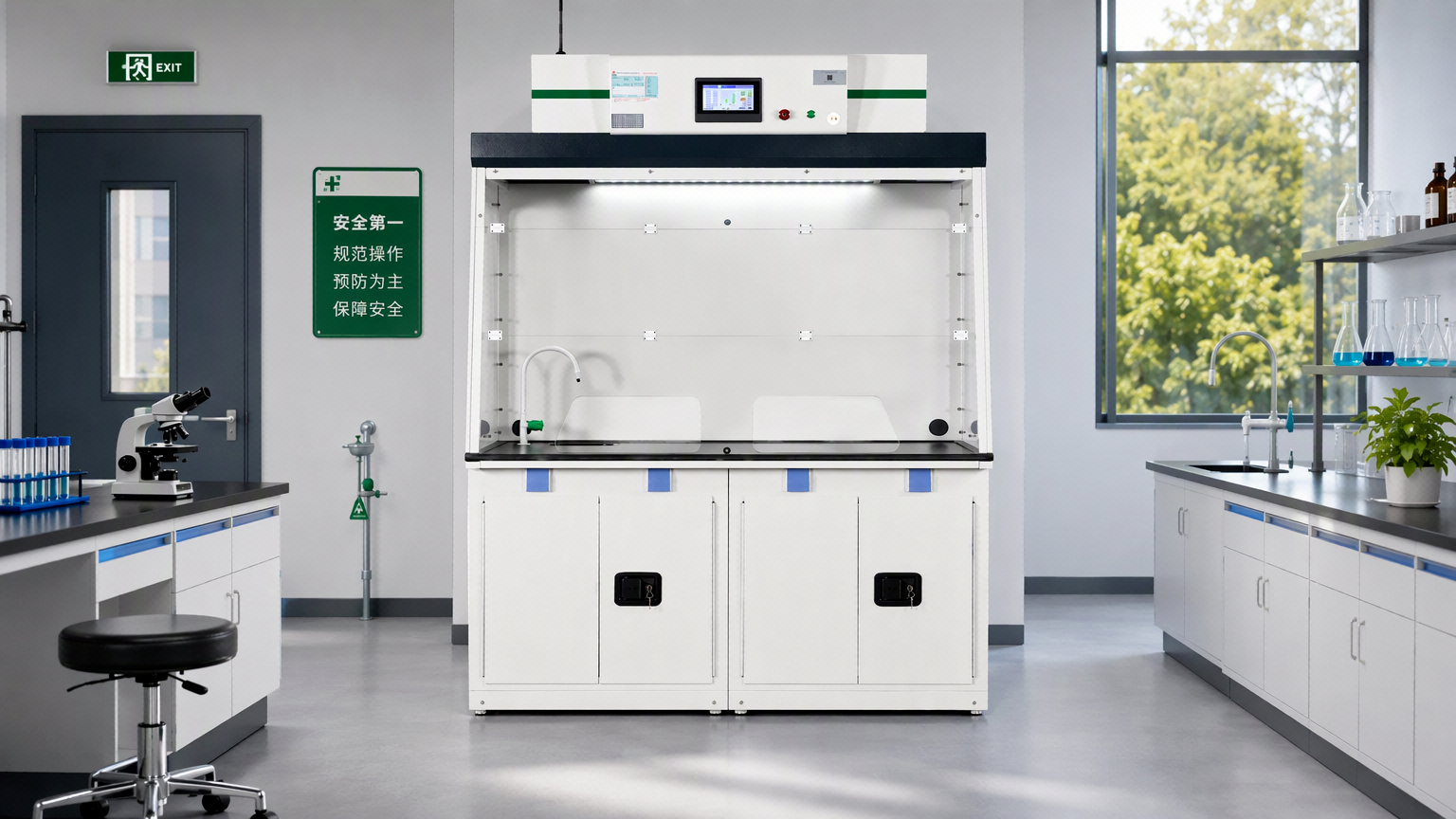
A well-designed laboratory needs more than good equipment. It also needs a safe, clean, and flexible workspace. In many laboratories, fume hoods play an important role in protecting workers from harmful fumes, vapors, and chemical odors. However, traditional ducted fume hoods often need complex ventilation systems, large exhaust ducts, and extra installation space.
A laboratory ductless fume hood offers a more flexible option. It uses built-in filters to capture and remove certain airborne contaminants from the air before returning filtered air to the room. As a result, it can help laboratories save space, simplify installation, and create a more efficient working environment.
Whether you are planning a new laboratory or upgrading an existing one, choosing the right ductless fume hood can improve both workspace design and daily operations. In this article, we will explore its key features, benefits, and important selection factors, as well as introduce laboratory fume hood solutions from AMPLE.
What Is a Laboratory Ductless Fume Hood?
A laboratory ductless fume hood is a type of laboratory safety equipment designed to control chemical fumes and vapors. Unlike a traditional ducted fume hood, it does not need an external exhaust duct connected to the building's ventilation system.
Instead, it uses a fan to draw contaminated air into the hood. The air then passes through suitable filters, which capture specific chemical vapors or particles. After filtration, the cleaned air is returned to the laboratory.
Most ductless fume hoods include several main components:
-
Work surface: Provides a stable area for laboratory tasks.
-
Transparent sash: Creates a physical barrier between the user and the work area.
-
Internal fan: Pulls air through the filtration system.
-
Filter system: Captures suitable contaminants based on the filter type.
-
Control panel: Allows users to monitor and control basic operating functions.
-
Cabinet structure: Supports the equipment and helps contain fumes during operation.
However, filter selection is very important. Different chemicals require different filter materials. Therefore, users should check chemical compatibility, filter capacity, and replacement schedules before choosing a ductless system.
How Does a Laboratory Ductless Fume Hood Improve Workspace Design?
An efficient laboratory layout should support safety, comfort, and smooth daily work. A ductless fume hood can help achieve these goals in several ways.
1. Save Space Without External Ductwork
Traditional ducted fume hoods need exhaust pipes that connect to a building's ventilation system. These pipes may take up valuable ceiling and wall space. They can also limit where laboratory equipment can be installed.
In comparison, a laboratory ductless fume hood uses an internal filtration system. Therefore, it does not require a long external exhaust duct. This makes it easier to arrange laboratory benches, storage areas, and other equipment.
2. Offer More Flexible Installation
Laboratory layouts may change as research needs grow. For example, a laboratory may add new testing equipment or create a separate work area for a new project.
Because ductless fume hoods do not need traditional exhaust connections, they can offer more flexibility when planning equipment placement. In addition, installation is often simpler when the building does not need major ductwork changes.
Nevertheless, the hood still needs a suitable electrical supply, enough space, and proper operating conditions.
3. Support a Cleaner Working Environment
A good filtration system can capture specific airborne contaminants produced during suitable laboratory tasks. As a result, it helps reduce the release of these contaminants into the room.
Moreover, the sash provides a physical barrier between the operator and the work area. Together, these features help support a cleaner and more controlled laboratory environment.
However, a ductless fume hood is not suitable for every chemical or laboratory process. It should only be used for applications approved by the manufacturer and supported by the selected filter system.
Key Features to Consider in a Laboratory Ductless Fume Hood
Not all ductless fume hoods have the same design or performance. Therefore, laboratories should compare several key features before making a purchase.
1. Filter Type and Filtration Performance
The filter system is one of the most important parts of a ductless fume hood. It directly affects which contaminants the equipment can capture.
Common filter types include:
-
Activated carbon filters: Designed to capture certain chemical vapors and organic compounds.
-
HEPA filters: Designed to capture airborne particles, but not most chemical gases or vapors.
-
Combined filter systems: Use different filter materials to handle specific combinations of contaminants.
However, no single filter can handle every chemical. Therefore, always check the chemical safety data sheets (SDS) and confirm that the filter matches your laboratory applications.
2. Airflow Control and Safety Alarms
Stable airflow is essential for fume hood performance. A suitable system should draw air into the work area and guide it through the correct filtration path.
In addition, airflow indicators and safety alarms can help users identify problems during operation. For example, an alarm may alert workers when airflow drops below the required level or when the filter needs attention.
These features make daily operation easier and help users respond to potential safety risks.
3. Work Surface and Interior Space
The internal space should match the type of work performed in the laboratory. If the work area is too small, users may find it difficult to handle samples, tools, and containers.
Therefore, check both the external dimensions and the usable work surface. Also, consider the sash height, lighting, and access to controls.
A practical design can improve comfort and make daily tasks more efficient.
4. Easy Maintenance and Filter Replacement
Regular maintenance helps keep a ductless fume hood working properly. Over time, filters may become saturated or blocked, which can reduce their ability to capture contaminants.
For this reason, buyers should check how easily filters can be inspected and replaced. They should also ask about replacement costs, service support, and filter availability.
Furthermore, a clear maintenance plan can reduce equipment downtime and support long-term operation.
How to Choose the Right Laboratory Ductless Fume Hood
Choosing the right laboratory ductless fume hood requires careful planning. Instead of focusing only on price or appearance, consider the following steps.
Step 1: Identify Your Laboratory Applications
First, list the chemicals and materials used in your laboratory. Different tasks may produce different types and amounts of contaminants.
Next, review the SDS for each chemical. This helps you understand its risks and decide whether a ductless filtration system is suitable.
For highly hazardous substances, unknown mixtures, or processes that produce large amounts of vapor, a ducted fume hood or another suitable exhaust system may be necessary.
Step 2: Measure the Available Workspace
Before purchasing equipment, measure the available floor and bench space.
Consider the following factors:
-
Available installation width and depth
-
Internal working area
-
Distance from nearby equipment
-
Access for cleaning and maintenance
-
Electrical connections and power supply
As a result, you can choose a hood that fits your laboratory without making the workspace crowded.
Step 3: Select the Right Filtration System
The filtration system should match the chemicals and contaminants produced during laboratory work.
For example, activated carbon may be suitable for certain organic vapors, while HEPA filtration is used for airborne particles. However, these filters have different functions and cannot replace each other.
Therefore, ask the supplier to confirm filter compatibility before placing an order.
Step 4: Check Safety Standards and Operating Requirements
Laboratory safety should always come first. Before installation, check the applicable local regulations, ventilation requirements, and equipment standards.
Also, make sure that the selected fume hood provides suitable airflow and containment for the intended application.
In addition, train laboratory staff to use the equipment correctly. Proper operation is just as important as choosing the right product.
Step 5: Compare Long-Term Operating Costs
The purchase price is only one part of the total cost. Filter replacement, electricity use, maintenance, and technical support can also affect the long-term budget.
For example, a low-cost unit may become more expensive if its filters need frequent replacement.
Therefore, compare the expected operating costs before making your final decision.
Laboratory Ductless Fume Hood Applications in Different Workspaces
A ductless fume hood can support different laboratory activities when its filtration system matches the application. Here are several common settings to consider.
Teaching and Educational Laboratories
Schools and universities often need flexible equipment for practical lessons and demonstrations. A ductless fume hood may help make better use of limited classroom space.
Moreover, its relatively simple installation can make laboratory planning easier. However, teachers should confirm that the chemicals used in each experiment are suitable for the selected filter system.
Research and Development Laboratories
Research laboratories often handle different samples and chemicals during testing. Therefore, they need equipment that supports safe and organized work.
A suitable ductless fume hood may provide a convenient workspace for approved small-scale experiments. However, researchers should review filtration requirements whenever they change chemicals or experimental methods.
Pharmaceutical and Quality Control Laboratories
Pharmaceutical and quality control laboratories need well-organized work areas for sample preparation, testing, and chemical handling.
A properly selected fume hood can help control certain chemical vapors during approved procedures. At the same time, laboratories should consider other equipment, such as safety storage cabinets and clean workstations, to create a more complete safety system.
Industrial Testing Laboratories
Industrial laboratories may perform material testing, product checks, and chemical analysis. These activities often require reliable equipment and a practical workspace.
A ductless fume hood may suit certain testing tasks, especially when external duct installation is difficult. Nevertheless, industrial users should assess vapor levels, chemical types, and operating conditions before selecting a model.
Laboratory Ductless Fume Hood vs. Traditional Ducted Fume Hood
Both ductless and ducted fume hoods help control exposure to hazardous substances. However, their working methods and installation needs are different.
|
Comparison |
Ductless Fume Hood |
Ducted Fume Hood |
|---|---|---|
|
Air treatment |
Uses internal filters |
Exhausts air outside |
|
External ductwork |
Usually not required |
Required |
|
Installation |
Often more flexible |
Needs exhaust connections |
|
Workspace planning |
Can save installation space |
Requires duct routing |
|
Filter maintenance |
Essential |
Depends on system design |
|
Chemical suitability |
Limited by filter compatibility |
Depends on exhaust design and chemical risks |
|
Best use |
Approved applications with suitable filtration |
Applications requiring external exhaust |
In general, a ductless fume hood can be a practical choice when space and installation flexibility are important. On the other hand, a ducted fume hood is often more suitable for processes that require continuous external exhaust.
Therefore, the best choice depends on the chemicals, work methods, building design, and safety requirements of each laboratory.
How to Maintain a Laboratory Ductless Fume Hood
Proper maintenance is essential for long-term performance. Even a well-designed fume hood may lose its effectiveness if users ignore regular inspections.
Here are some basic maintenance practices:
-
Check filters regularly: Monitor filter condition and replace them according to the manufacturer's instructions.
-
Inspect airflow: Check airflow indicators and alarms to make sure the system operates as expected.
-
Keep the work area clean: Remove chemical spills and unnecessary items from the work surface.
-
Check the sash: Make sure the sash moves smoothly and remains in good condition.
-
Train laboratory staff: Teach users about proper operation, chemical limits, and emergency procedures.
In addition, keep maintenance records. These records help laboratory managers track filter changes, inspections, and equipment performance.
AMPLE Laboratory Fume Hood Solutions for Efficient Workspace Design
When planning an efficient laboratory, choosing a reliable equipment supplier is just as important as selecting the right fume hood.
AMPLE Solutions is a manufacturer and integrated solution provider specializing in laboratory safety equipment and workplace solutions. Its product range includes laboratory fume hoods, flammable storage cabinets, gas cylinder cabinets, laminar flow cabinets, and other laboratory equipment.
For laboratories that need better workspace planning, AMPLE provides several relevant product solutions:
-
Polypropylene Fume Hood: Designed for laboratories that handle corrosive chemicals. Its polypropylene structure offers acid and alkali resistance, while its exhaust fan and anti-corrosion air duct support fume extraction.
-
Universal Fume Exhaust Hood: Suitable for general laboratory and industrial fume extraction. It is designed to handle certain chemical vapors, dust, odors, and non-corrosive aerosols.
-
Flammable Safety Storage Cabinet: Provides organized storage for flammable liquids, chemicals, paints, and solvents. Its fire-resistant structure and leak-proof sump help control storage risks.
-
Laboratory Safety Equipment: Additional products, including emergency showers, eyewash stations, and laboratory faucets, help support a more complete working environment.
AMPLE also provides customized solutions for universities, research institutes, hospitals, and industrial projects. Its website highlights international compliance and certifications, including CE, ISO 9001, ISO 13485, and RoHS.
For buyers looking for a laboratory ductless fume hood, it is important to confirm the exact model, filter options, airflow performance, and chemical compatibility with the supplier before ordering. AMPLE's team can be contacted to discuss project requirements and suitable fume hood solutions.
Visit the official website for more information: www.cdample.com.
Conclusion: Choose the Right Laboratory Ductless Fume Hood for Better Workspace Design
A laboratory ductless fume hood can help improve workspace design by reducing the need for external ductwork, saving installation space, and offering more flexible equipment placement. It can also help control certain chemical vapors when the filtration system matches the laboratory's actual needs.
However, choosing the right equipment requires more than checking its size and price. Filter compatibility, airflow performance, safety features, maintenance, and chemical risks should all be considered.
By planning carefully and working with an experienced laboratory equipment supplier likeAMPLE, laboratories can create a more organized, practical, and efficient working environment.
Share to:


