Ductless Fume Hood: A Complete Guide for Laboratories
News Details
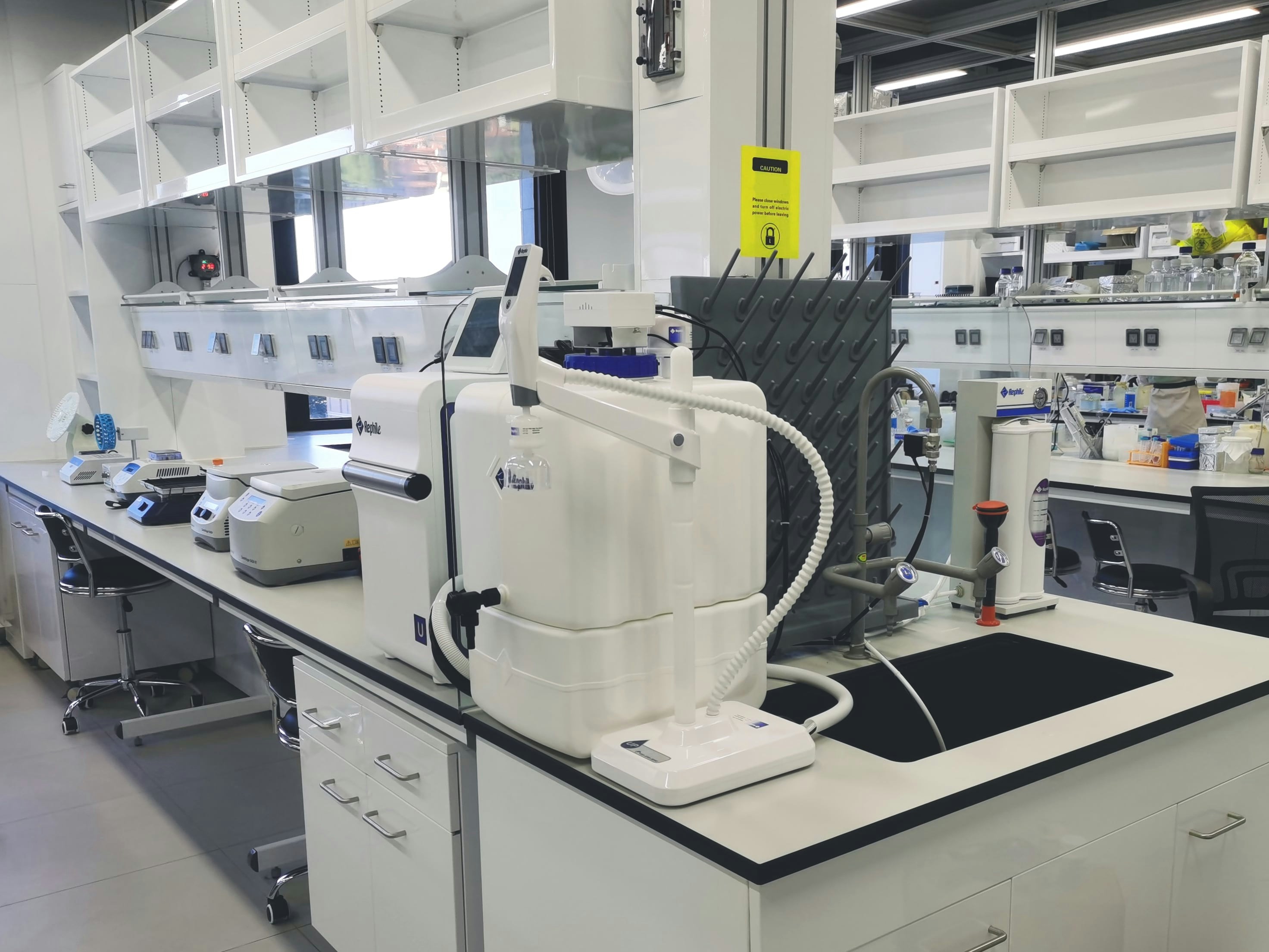
A ductless fume hood is a laboratory ventilation system that captures harmful fumes, vapors, odors, and some airborne particles without requiring a fixed exhaust duct to the outside. Instead, the hood draws contaminated air through filters before returning filtered air to the laboratory.
Because it does not need complex ductwork, a ductless fume hood can offer more flexibility during laboratory planning and renovation. However, it is not suitable for every chemical or every laboratory task. Therefore, users should understand its working principle, filter system, applications, and safety limits before making a choice.
This complete guide explains the key points to consider when selecting a ductless fume hood for a modern laboratory.
What Is aDuctless Fume Hoodfor Laboratory Use?
A ductless fume hood is an enclosed work area designed to capture contaminants produced during laboratory processes. Unlike a traditional ducted fume hood, it does not normally send laboratory air through a permanent exhaust duct to the outside.
Instead, the system uses a fan to pull air into the hood. The contaminated air then passes through suitable filters. Depending on the application, these may include activated carbon filters, HEPA filters, or other filtration systems.
After filtration, the treated air is returned to the room.
This design makes a ductless fume hood different from a standard ducted laboratory fume hood. Therefore, choosing between the two requires a clear understanding of the chemicals, processes, and level of protection required.
How Does a Ductless Fume Hood Work?
The basic working process is simple.
First, the laboratory worker places the experiment inside the hood. When the fan starts, air moves into the enclosure through the front opening.
Next, the airflow carries fumes and contaminants away from the operator's breathing zone. The contaminated air then moves through the filter system.
The filter captures or absorbs specific contaminants. For example, activated carbon can be used for certain chemical vapors, while HEPA filtration is designed to capture very small airborne particles.
Finally, filtered air is released back into the laboratory.
However, filter performance depends on the type of contaminant. As a result, the filter must be selected according to the chemicals and processes used in the laboratory.
What Are the Main Benefits of a Ductless Fume Hood?
A ductless fume hood offers several practical benefits for laboratories.
Flexible Laboratory Installation
Since a ductless system does not require a permanent exhaust duct, it can be easier to install in an existing laboratory. This can be useful when a building has limited space for new ventilation ducts.
In addition, the hood can usually be moved or repositioned more easily than a permanently ducted system.
Lower Installation Complexity
A ducted fume hood may require exhaust ducts, roof penetrations, fans, and other building work. By comparison, a ductless fume hood can reduce the amount of installation work required.
Therefore, it can be a practical option for laboratory renovations, temporary facilities, teaching laboratories, and smaller research spaces.
Space-Saving Design
Ductwork can take up valuable ceiling and wall space. A ductless system avoids much of this infrastructure.
As a result, laboratories with limited building space may find a ductless fume hood easier to integrate into the existing layout.
Flexible Laboratory Planning
Because there is less dependence on fixed exhaust infrastructure, laboratory planners have more freedom when deciding where to place the hood.
This flexibility can be especially useful when laboratory layouts change over time.
What Are the Limitations of Ductless Fume Hoods?
Although ductless fume hoods have many benefits, they are not a universal replacement for ducted systems.
The most important limitation is filtration. A filter can only remove contaminants for which it is designed and rated.
For example, an activated carbon filter may be suitable for certain chemical vapors, but it should not automatically be assumed to handle every chemical. Similarly, HEPA filters are designed primarily for particles rather than all chemical gases and vapors.
Therefore, laboratories should review chemical compatibility, filter performance, exposure risks, and manufacturer recommendations before selecting a ductless fume hood.
For highly hazardous, highly volatile, unknown, or continuously generated contaminants, a properly designed ducted exhaust system may be more appropriate.
Ductless Fume Hood vs. Ducted Fume Hood
The main difference is how contaminated air is handled.
A ducted fume hood connects to an external exhaust system. Contaminated air is captured and discharged outside the building through ductwork.
A ductless fume hood uses an internal filtration system. After filtration, the treated air is returned to the laboratory.
Therefore, the choice should not be based only on installation cost or convenience.
Consider the following factors:
- Type of chemicals used
- Quantity of chemicals
- Frequency of laboratory work
- Type and concentration of fumes
- Required filtration
- Laboratory ventilation system
- Available building space
- Local safety requirements
- Maintenance needs
In short, the right system depends on the laboratory process rather than simply the available space.
What Filters Are Used in a Ductless Fume Hood?
Filter selection is one of the most important parts of a ductless fume hood.
Activated Carbon Filters
Activated carbon filters are commonly used to adsorb certain chemical vapors and odors. Different carbon materials can target different chemical groups.
However, carbon filters do not have unlimited capacity. Once the filter becomes saturated, its performance can drop. Therefore, regular monitoring and timely replacement are essential.
HEPA Filters
HEPA filters are mainly used to capture fine airborne particles. They are useful for applications where particulate contamination is a concern.
However, HEPA filtration should not be treated as a general solution for chemical vapors. Laboratories should select the filter according to the actual hazard.
Combined Filter Systems
Some ductless fume hoods use more than one filter stage. For example, a system may combine particulate filtration with chemical filtration.
This approach can provide broader filtration performance when the laboratory process produces more than one type of contaminant.
How to Choose the Right Ductless Fume Hood?
Before purchasing a ductless fume hood, laboratory managers should review several key points.
Identify the Chemicals and Processes
Start by listing the chemicals that will be used inside the hood.
Consider their:
- Chemical name
- Physical form
- Vapor characteristics
- Quantity
- Concentration
- Frequency of use
- Potential hazards
This information helps determine whether a ductless system is appropriate and which filter technology is required.
Check the Required Airflow
Stable airflow is essential for effective fume capture.
A good laboratory fume hood should provide suitable airflow across the working opening while maintaining effective containment. Therefore, buyers should review the manufacturer's airflow specifications rather than selecting a model based only on appearance or size.
Select the Correct Hood Size
The work area should provide enough space for the intended laboratory process.
However, a larger hood is not always better. An oversized work area may require more airflow and occupy more laboratory space.
Therefore, select a size that matches the equipment and experiments you actually need to perform.
Review Filter Life and Maintenance
Filter replacement is a normal part of operating a ductless fume hood.
Before purchasing, ask about:
- Filter type
- Filter capacity
- Replacement frequency
- Filter monitoring
- Replacement cost
- Maintenance procedures
This helps laboratories estimate the long-term operating cost.
Consider Noise Levels
The fan is an important part of a ductless fume hood. However, excessive noise can affect laboratory comfort.
For laboratories used for long periods, quiet operation can make the working environment more comfortable.
Where Are Ductless Fume Hoods Commonly Used?
Ductless fume hoods can be used in various laboratory and research environments when the application is suitable for filtered containment.
Common examples include:
- University teaching laboratories
- Research laboratories
- Small testing rooms
- Sample preparation areas
- Pharmaceutical research environments
- Industrial testing laboratories
- Quality control laboratories
- Small-scale chemical processes
For example, a teaching laboratory may need flexible fume protection without making major changes to the building ventilation system. In this case, a properly selected ductless fume hood can offer practical flexibility.
Still, the exact application must be checked against the chemical hazards and filtration requirements.
Ductless Fume Hood Safety Tips for Laboratories
Proper operation is just as important as product selection.
First, keep the work area organized. Do not block the airflow path with large equipment or excessive materials.
Next, keep the sash at the recommended operating position. The sash helps create the intended airflow and provides a physical barrier between the operator and the experiment.
Also, avoid using chemicals that the installed filter is not designed to handle.
In addition, inspect filters regularly and replace them according to the manufacturer's instructions or the results of appropriate monitoring.
Finally, laboratory users should follow their organization's chemical safety procedures and applicable regulations.
Ductless Fume Hood Maintenance Guide
Regular maintenance helps keep a fume hood working properly.
The fan and airflow system should be checked regularly. At the same time, filters should be inspected and replaced when required.
The work surface and interior should also be cleaned. Chemical residues can affect both safety and equipment life.
Furthermore, airflow performance should be checked at suitable intervals. If airflow changes significantly, the laboratory should investigate the cause before continuing hazardous work.
A clear maintenance schedule can include:
- Daily visual inspection
- Regular surface cleaning
- Airflow checks
- Filter condition checks
- Scheduled filter replacement
- Periodic professional inspection
The exact maintenance interval depends on the model and laboratory application.
How AMPLESupports Laboratory Fume Hood Solutions
AMPLE Solutions is a manufacturer and integrated solution provider of laboratory safety and workplace equipment. Its product range includes laboratory fume hoods, flammable storage cabinets, gas cylinder cabinets, laminar flow cabinets, acoustic pods, and ergonomic laboratory solutions.
AMPLE offers several types of fume hood solutions, including ductless fume hoods, universal fume exhaust hoods, steel fume hoods, and polypropylene fume hoods. Its ductless model is described as a portable, self-contained system designed to capture and filter fumes, vapors, dust, and airborne contaminants. It uses activated carbon or HEPA filtration depending on the application.
For laboratories handling corrosive chemicals, AMPLE also offers polypropylene fume hoods. These use chemical-resistant PP construction and are designed for applications involving corrosive fumes and gases.
Beyond individual products, AMPLE provides customized laboratory solutions based on laboratory function, chemical use, available space, and project requirements. The company states that its products and solutions are designed around international standards and lists CE, EN, ISO, NFPA, and ASHRAE among its compliance references.
This makes AMPLE a potential equipment partner for laboratories that need to combine fume control with other laboratory safety equipment.
How to Maintain Safe Ductless Fume Hood Operation
A ductless fume hood works best when the equipment, filter, airflow, and laboratory process are properly matched.
Therefore, laboratories should not treat the hood as a simple plug-and-use device.
Before installation, confirm that the selected model is suitable for the planned chemicals. During operation, use the hood according to the manufacturer's instructions. After installation, monitor airflow and filter condition.
Most importantly, do not use a ductless fume hood for a chemical or process that exceeds the filtration system's design limits.
Conclusion: Choosing a Ductless Fume Hood for Your Laboratory
A ductless fume hood can provide flexible fume control without the need for complex external ductwork. It can be useful for laboratories with limited space, renovation projects, teaching environments, and selected research applications.
However, the right choice depends on more than hood size or installation cost. Chemical compatibility, filter type, airflow, maintenance, laboratory layout, and safety requirements all need to be considered.
For laboratories looking for a complete safety equipment solution, AMPLEprovides ductless and ducted fume hoods alongside other laboratory safety products. By matching the hood design with the actual laboratory process, users can create a safer, more practical, and more flexible working environment.


