What Should Laboratories Consider When Purchasing a Perchloric Acid Fume Hood?
News Details
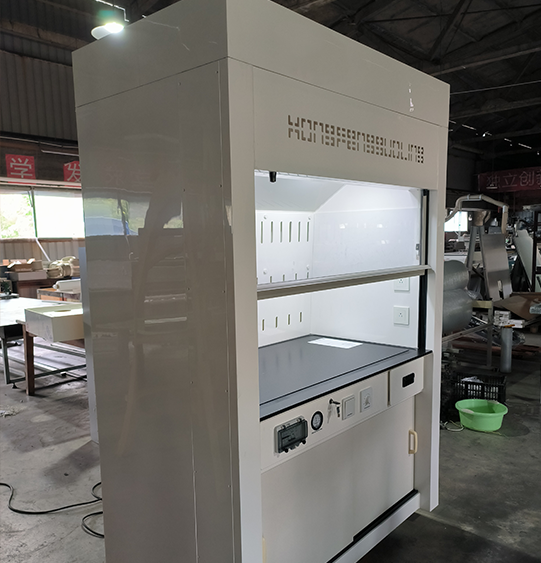
Perchloric acid is one of the most hazardous chemicals used in laboratories. While it is highly effective for certain analytical and research applications, it can also create serious safety risks if handled improperly. Therefore, laboratories must be extremely careful when selecting a perchloric acid fume hood.
Unlike standard laboratory fume hoods, a perchloric acid fume hood is specially designed to handle corrosive vapors and prevent the buildup of explosive perchlorate residues. As a result, choosing the right system is essential for laboratory safety, compliance, and long-term performance.
In this guide, we will discuss the most important factors laboratories should consider before purchasing a perchloric acid fume hood and how AMPLE can help provide reliable laboratory safety solutions.
Why Is a Dedicated Perchloric Acid Fume Hood Necessary?
To begin with, perchloric acid behaves differently from many other laboratory chemicals. During heating or digestion processes, it can produce perchlorate crystals. These deposits may accumulate inside ductwork and ventilation systems.
Over time, this buildup can become highly explosive.
Therefore, standard fume hoods are generally not suitable for perchloric acid applications. Instead, laboratories need a specially engineered perchloric acid fume hood that can safely remove vapors while preventing dangerous residue accumulation.
A properly designed system helps:
- Protect laboratory personnel
- Prevent chemical contamination
- Reduce fire and explosion risks
- Meet laboratory safety regulations
- Extend equipment service life
For these reasons, purchasing the correct hood should be considered a critical safety investment rather than a routine equipment purchase.
Consider the Construction Material of the Perchloric Acid Fume Hood
One of the first factors to evaluate is the construction material.
Because perchloric acid is highly corrosive, the hood must be made from materials that can resist chemical attack over many years of operation.
Common options include:
Polypropylene Construction
Polypropylene offers excellent chemical resistance and is widely used in modern corrosive chemical applications.
Benefits include:
- Outstanding corrosion resistance
- Lightweight design
- Long service life
- Easy cleaning and maintenance
Stainless Steel Construction
Certain grades of stainless steel may also be used for perchloric acid applications. However, the material must be carefully selected and properly finished to withstand aggressive chemical environments.
Many laboratories now prefer polypropylene solutions because of their superior resistance to highly corrosive chemicals.
AMPLE offers CE-certified polypropylene perchloric acid fume hoods designed specifically for demanding laboratory environments.
Evaluate the Wash-Down System Design
Another critical feature is the wash-down system.
Perchloric acid vapors can condense and form perchlorate deposits on interior surfaces. Therefore, the fume hood should include an integrated wash-down system that continuously removes residues.
An effective wash-down system should cover:
- Interior chamber walls
- Baffles
- Ductwork connections
- Exhaust pathways
Without proper washing capabilities, dangerous crystal accumulation may occur over time.
Consequently, laboratories should verify that the selected system provides complete cleaning coverage rather than partial protection.
Check Airflow Performance and Ventilation Efficiency
Ventilation performance directly affects laboratory safety.
A perchloric acid fume hood must maintain sufficient airflow to capture and remove hazardous vapors before they enter the laboratory environment.
Important airflow considerations include:
- Face velocity consistency
- Airflow monitoring systems
- Uniform air distribution
- Exhaust efficiency
- Emergency airflow alarms
In addition, laboratories should ensure that the hood integrates properly with the building's ventilation infrastructure.
A well-designed airflow system helps maintain a safe working environment while improving operational efficiency.
Ensure Compliance with Safety Standards
Safety compliance is another important purchasing factor.
Laboratories should verify that the perchloric acid fume hood meets applicable international standards and local regulations.
Important certifications may include:
- CE Certification
- ISO manufacturing standards
- Laboratory ventilation requirements
- Chemical safety regulations
Certified equipment provides greater confidence in both performance and safety.
At AMPLE, laboratory safety products are manufactured with strict quality control processes to support global laboratory projects.
Consider Future Maintenance Requirements
Many laboratories focus on the purchase price alone. However, long-term maintenance costs can significantly affect overall ownership expenses.
Therefore, buyers should consider:
- Ease of cleaning
- Accessibility of components
- Wash-down system maintenance
- Replacement part availability
- Technical support options
A well-designed system can reduce maintenance downtime and improve operational reliability over many years.
As a result, selecting a high-quality perchloric acid fume hood often leads to lower lifetime costs.
Look for Customization Options
Every laboratory has different requirements.
For example:
- University laboratories may have limited space.
- Pharmaceutical facilities may require advanced monitoring systems.
- Industrial laboratories may need larger work areas.
Therefore, customization can be a valuable advantage.
AMPLE provides flexible laboratory safety solutions that can be adapted to specific project requirements, including:
- Custom dimensions
- Ventilation configurations
- Utility integration
- Storage solutions
- Laboratory furniture compatibility
This flexibility allows laboratories to create safer and more efficient workspaces.
AMPLE Solution: CE-Certified Polypropylene Perchloric Acid Fume Hoods
As a professional laboratory equipment supplier, AMPLE specializes in laboratory safety equipment and integrated laboratory solutions.
One example is the AMPLE CE-Certified Polypropylene Perchloric Acid Resistant Fume Hood.
Key features include:
- High chemical resistance
- Durable polypropylene construction
- Efficient airflow design
- Wash-down capability
- Long-term corrosion protection
- Compliance-focused engineering
These systems are designed to support laboratories handling aggressive acids while maintaining high safety standards.
In several laboratory projects, customers selected polypropylene perchloric acid fume hoods from AMPLE to replace aging metal systems that suffered from corrosion issues. By upgrading to corrosion-resistant designs, laboratories improved equipment longevity and reduced maintenance concerns.
More information about AMPLE laboratory solutions can be found at https://www.cdample.com/.
Questions to Ask Before Purchasing a Perchloric Acid Fume Hood
Before making a final decision, laboratories should ask the following questions:
- Is the hood specifically designed for perchloric acid applications?
- Does it include a complete wash-down system?
- What material is used for construction?
- Does it meet applicable safety standards?
- How easy is it to maintain?
- Can it be customized for our laboratory layout?
- Does the manufacturer have experience with laboratory safety projects?
These questions can help buyers avoid costly mistakes and ensure long-term safety.
Conclusion
Purchasing a perchloric acid fume hood requires careful evaluation of safety, materials, ventilation performance, compliance, and maintenance requirements. Because perchloric acid presents unique hazards, laboratories should never rely on standard fume hood designs for these applications.
Instead, investing in a purpose-built perchloric acid fume hood helps protect personnel, equipment, and facilities while supporting regulatory compliance.
For laboratories seeking reliable and corrosion-resistant solutions, AMPLEoffers CE-certified polypropylene perchloric acid fume hoods and comprehensive laboratory safety equipment designed for modern research, testing, and industrial environments.
Visit https://www.cdample.com/ to learn more about AMPLE's laboratory equipment and safety solutions.


