How Many Fume Hoods Should a Laboratory Have?
News Details
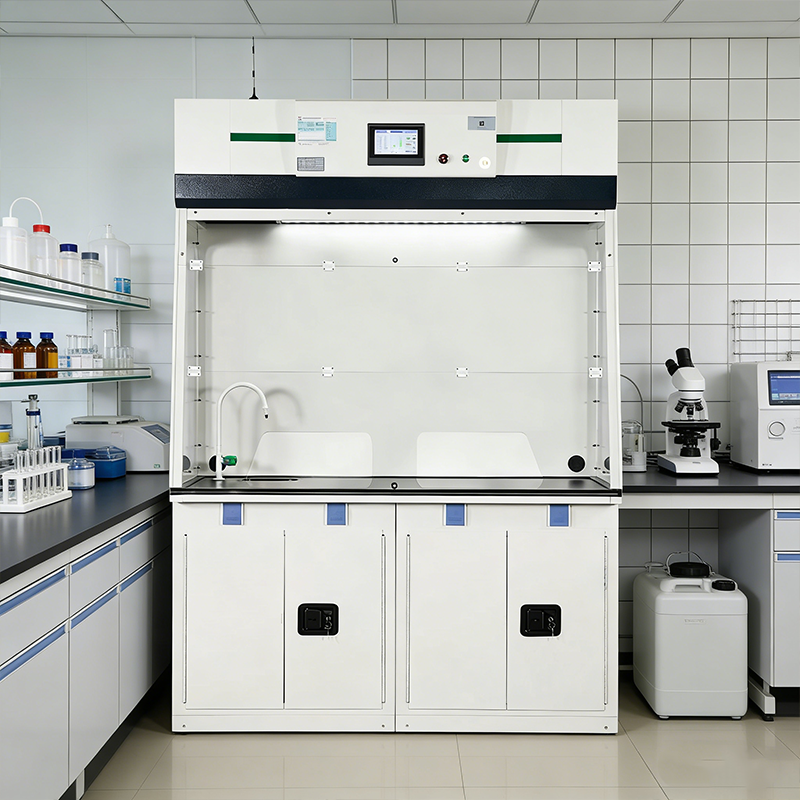
Designing a modern laboratory requires careful planning of safety equipment, airflow systems, and workflow efficiency. One of the most important pieces of laboratory safety infrastructure is the fume hood, also known in many regions as a fume cupboard or laboratory fume cupboard. These ventilation systems protect researchers from hazardous fumes, chemical vapors, and toxic gases generated during experiments.
A common question asked by laboratory planners, safety officers, and procurement managers is: How many fume hoods should a laboratory have? The answer depends on several factors including laboratory size, research activities, chemical hazards, ventilation capacity, and safety regulations.
In this article, we will explore the key considerations that determine the optimal number of laboratory fume hoods, how to plan an efficient laboratory ventilation system, and how to select the right chemical fume hood or ductless fume cupboard for your facility.
Understanding the Role of a Laboratory Fume Hood
A fume hood is a ventilated enclosure designed to capture, contain, and remove hazardous chemical fumes, vapors, aerosols, and dust produced during laboratory work. By drawing contaminated air away from the operator and exhausting it through a ventilation system or filtration unit, a chemical fume hood significantly reduces exposure to toxic substances.
Depending on laboratory design and application, several types of fume cupboards are commonly used:
-
Ducted fume hood – connected to an external exhaust system
-
Ductless fume hood – uses advanced filtration to clean the air before recirculation
-
PP fume hood (polypropylene fume hood) – highly resistant to corrosive chemicals
-
Acid-resistant fume cupboard – designed for strong acid and alkali handling
-
Low flow fume hood – optimized for energy efficiency
-
Walk-in fume hood – used for large equipment or chemical processes
Each type of laboratory fume cupboard serves a specific purpose depending on the chemicals used and the safety requirements of the lab.
Key Factors That Determine How Many Fume Hoods a Lab Needs
1. Laboratory Size and Layout
The physical size of the laboratory is the first factor to consider. A typical guideline in many research institutions suggests one fume hood for every 2–5 researchers depending on experiment frequency.
For example:
-
Small research labs: 1–2 chemical fume hoods
-
Medium laboratories: 3–6 laboratory fume cupboards
-
Large research or pharmaceutical labs: 6+ fume hood workstations
However, laboratory planners should avoid overcrowding. Installing too many laboratory fume cupboards can negatively impact airflow balance and HVAC performance.
A good rule in laboratory design is that fume hoods should not occupy more than 30% of the laboratory wall space.
2. Type of Laboratory Work
The type of work conducted in the lab directly affects the number of fume hoods required.
Labs handling volatile chemicals, toxic solvents, or strong acids usually require more chemical fume cupboards than laboratories focused on biological research.
Examples include:
-
Chemical laboratories – multiple ducted fume hoods
-
Pharmaceutical laboratories – specialized containment fume cupboards
-
University research labs – general purpose laboratory fume hoods
-
Environmental testing labs – acid-resistant fume cupboards
-
Industrial laboratories – heavy-duty polypropylene fume hoods
If experiments frequently release hazardous vapors, additional laboratory ventilation hoods may be necessary to maintain safe exposure levels.
3. Laboratory Safety Standards and Regulations
International laboratory safety standards also influence the number of fume cupboards required.
Regulatory guidelines from organizations such as:
-
Occupational Safety and Health Administration (OSHA)
-
American National Standards Institute (ANSI)
-
American Society of Heating, Refrigerating and Air-Conditioning Engineers (ASHRAE)
recommend that laboratories ensure adequate ventilation and containment systems when working with hazardous chemicals.
Typical recommendations include:
-
Face velocity around 80–100 feet per minute (fpm)
-
Proper airflow containment inside the laboratory fume cupboard
-
Routine inspection and fume hood testing
Compliance with these safety standards may require installing additional chemical fume hoods in high-risk environments.
4. Frequency of Chemical Experiments
Another factor is how often chemical experiments occur.
If multiple researchers conduct experiments simultaneously, they cannot share a single fume hood workstation safely. In such cases, laboratories should install multiple lab fume hoods to avoid congestion and safety risks.
For example:
| Laboratory Type | Recommended Number of Fume Hoods |
|---|---|
| Teaching laboratory | 1 hood per 4–6 students |
| Research laboratory |
Share to:
       How Should a Laboratory Fume Hood Be Installed Correctly?
How Does a Fume Hood Improve Airflow Control and Operator Protection?


|